
We recently had a customer send in their Merckx, not happy with the previous custom paint job they had done by well known company in the UK and the subsequent hassle trying to get it sorted with them, in the end they cut their losses and came to us.
I don’t like putting other peoples work down, but in all fairness the customer had been charged a lot of money for what was essentially a ‘scuff and shoot’ paint job, where the painter does the bare minium in terms of surface preperation and then puts a new paint job on top.
This looks ok sometimes, but it can cause a lot of issues, especially with paint build up. Layers of paint accumulated add additonal weight to the frame, add surface depth to contact points such as brake mounts and bottom brackets, especially if the surfaces haven’t been ‘faced’ and so the components sit on paint and not the frame.
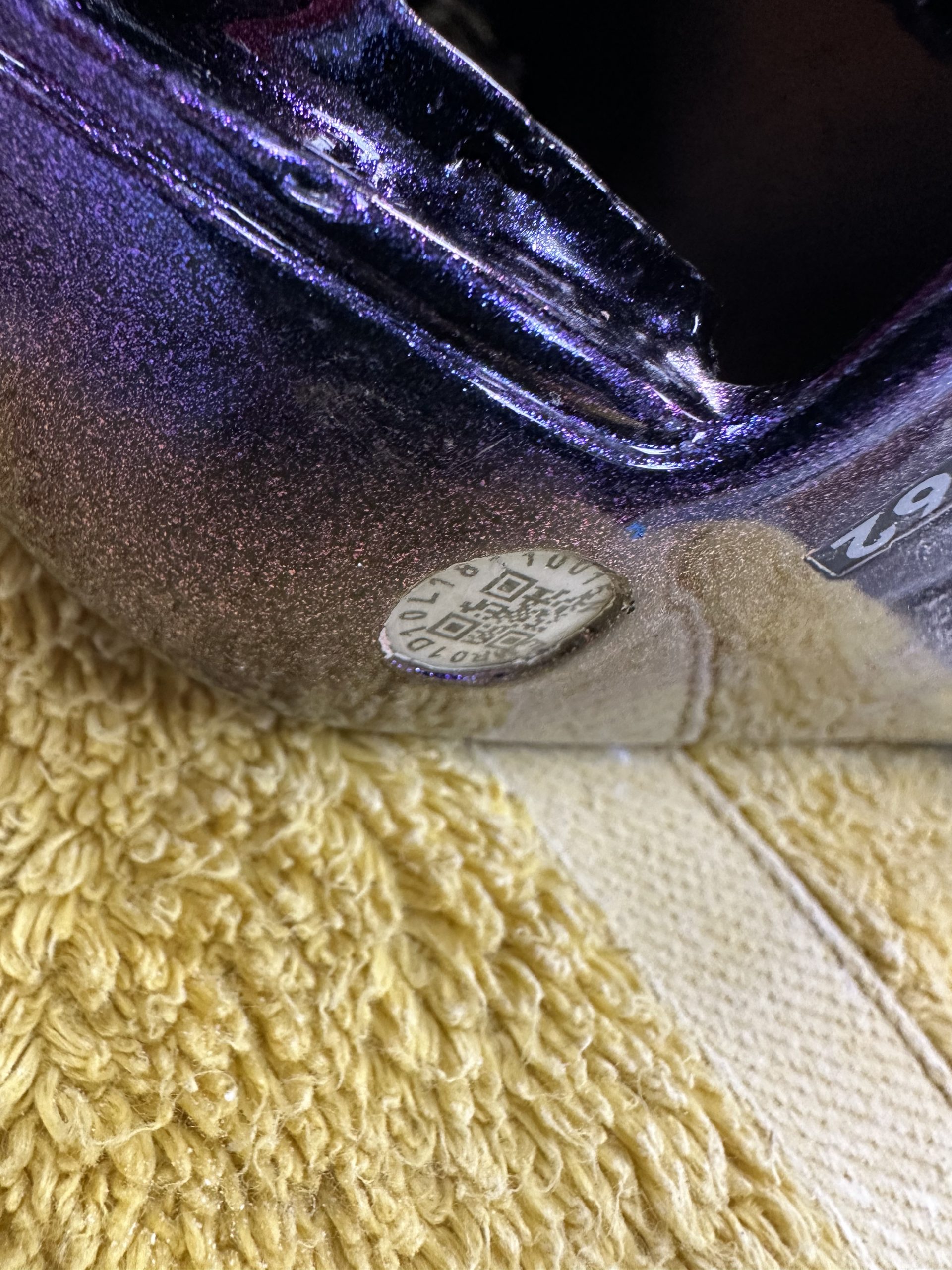
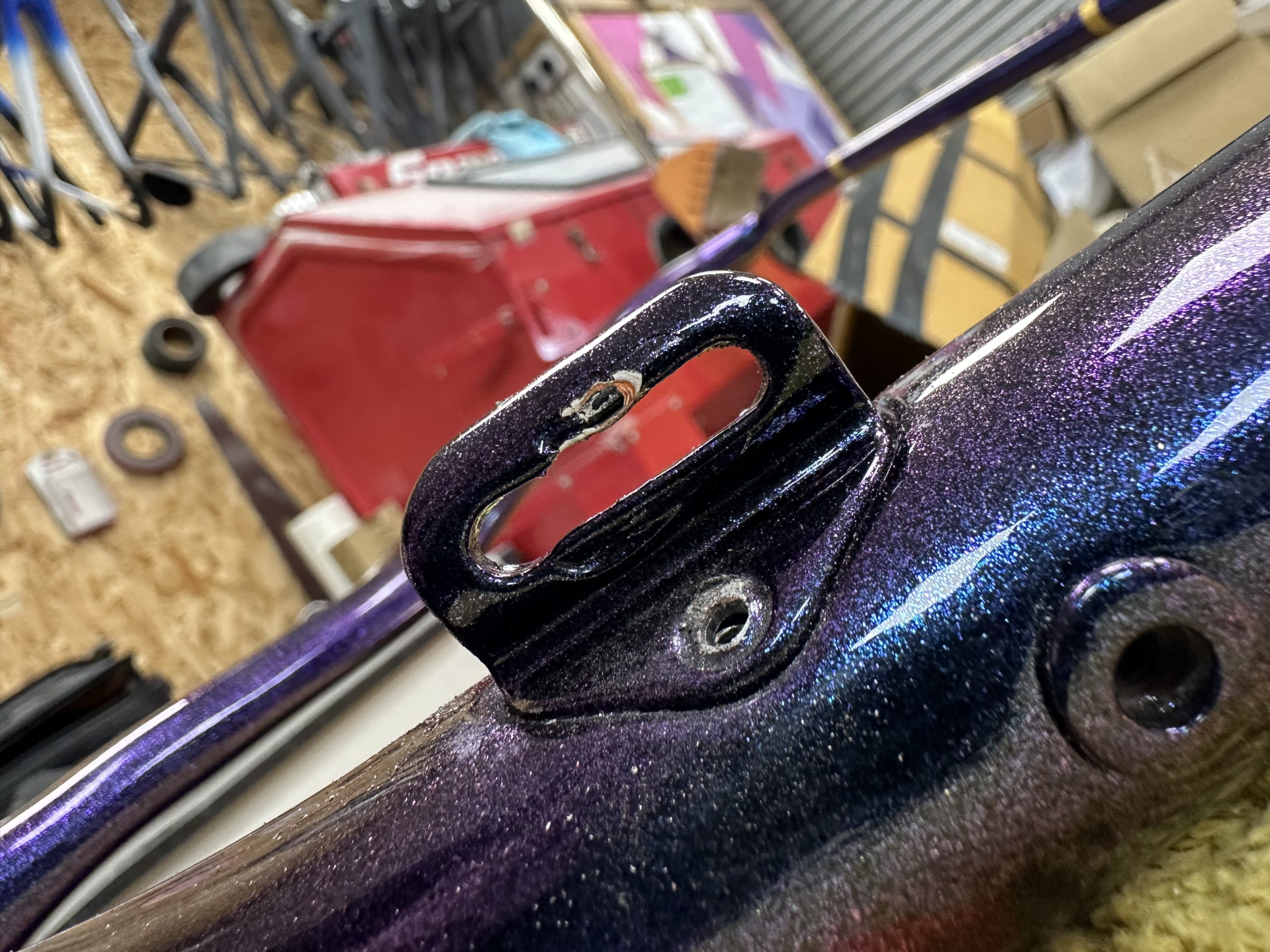
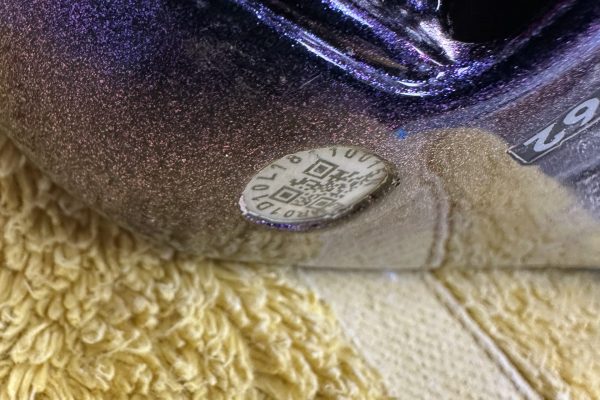
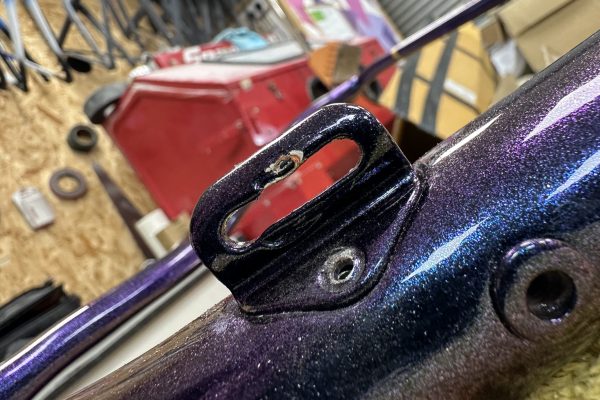
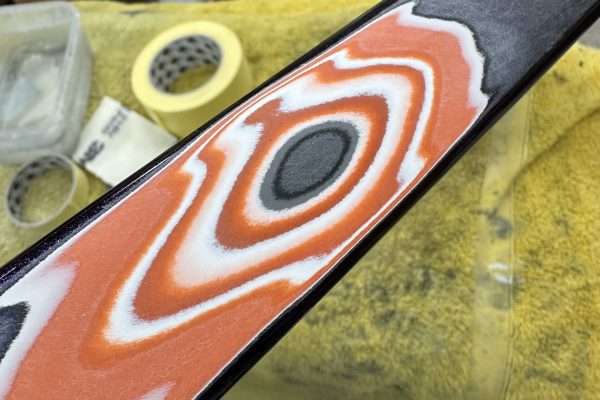
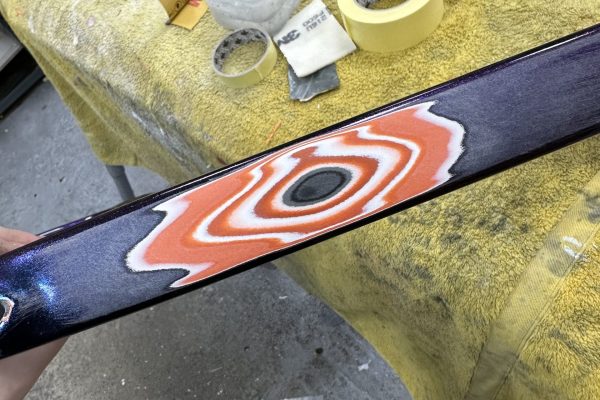
This was the case for this frame as the customer had noticed a lot of chips caused by compression. You can see how thick the paint is from the images where the serial number has been masked and the front derailleur hanger (which shouldnt be painted).
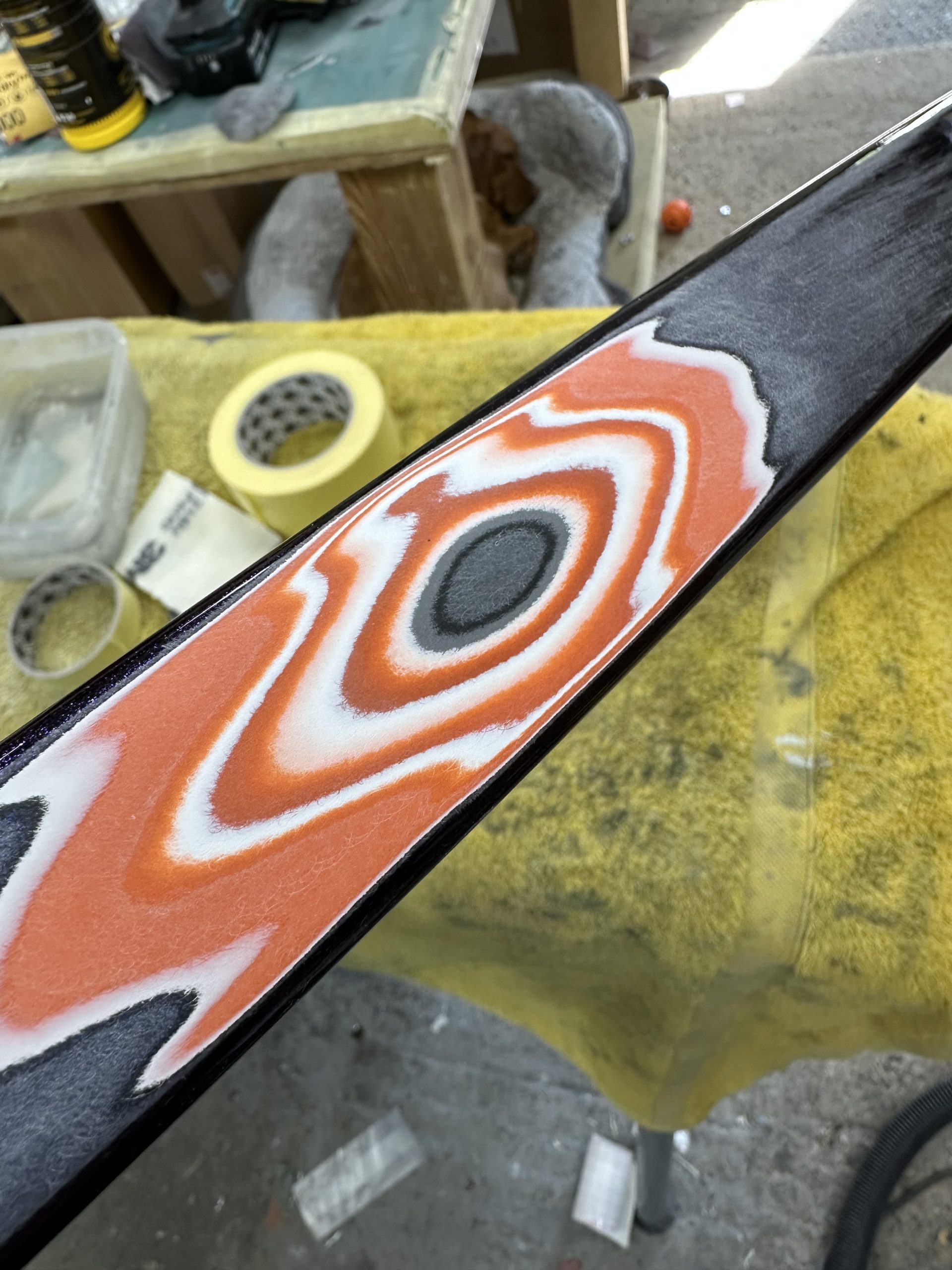
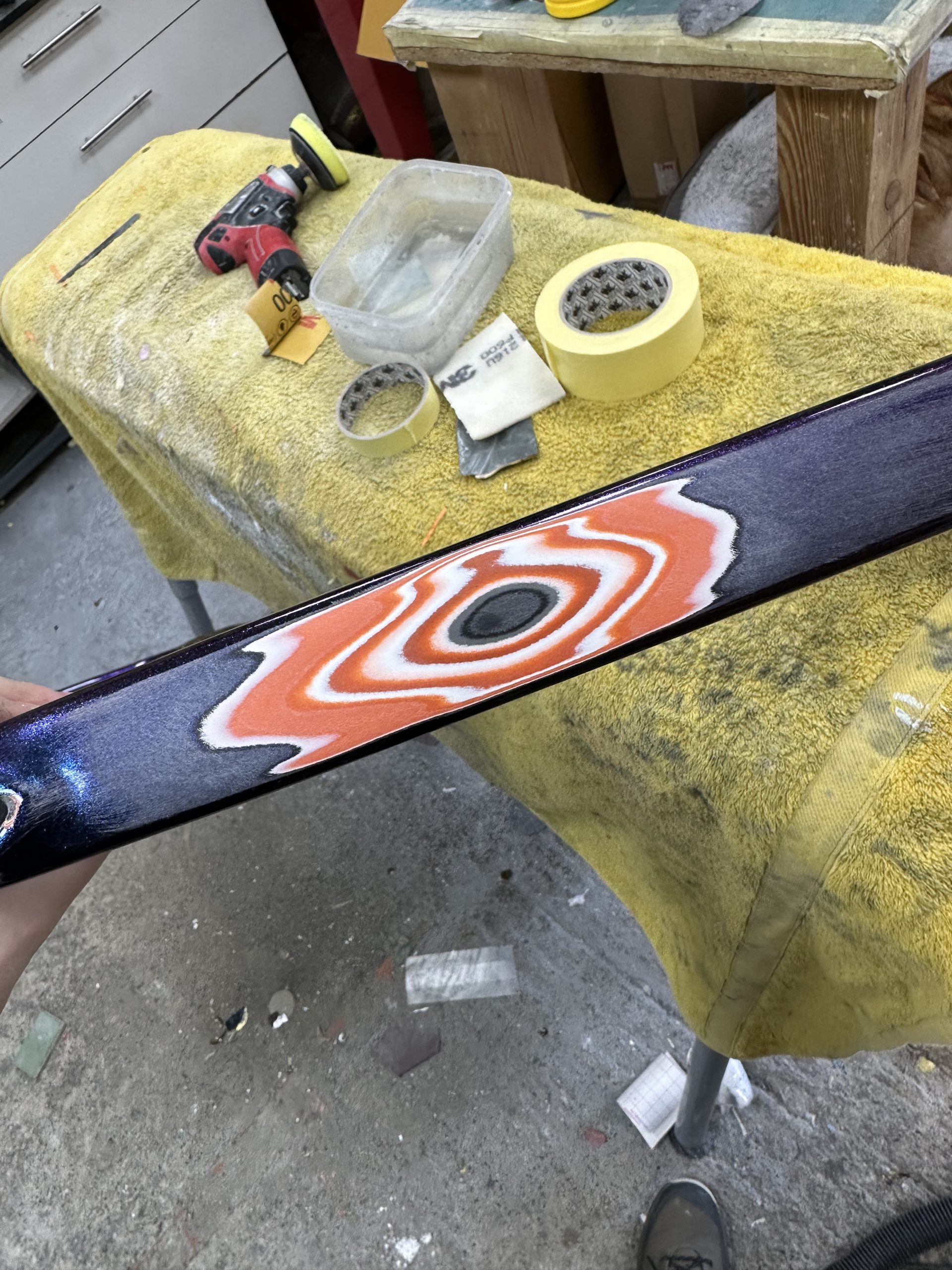
On intial inspection, light sanding in places and examining various chips, it was clear the previous painter had done a ‘scuff and shoot’ as the original paint job appeared with only minimal sanding, and then further exploration showed it had at least 8 layers of paint, including what looked like 3 factory orange repaints. Whileit’s not unusual to see another factory paint job underneath, to see this amount of the same paint was very strange.
In all my years painting bikes I’ve never experienced this amount of paint on a frame.
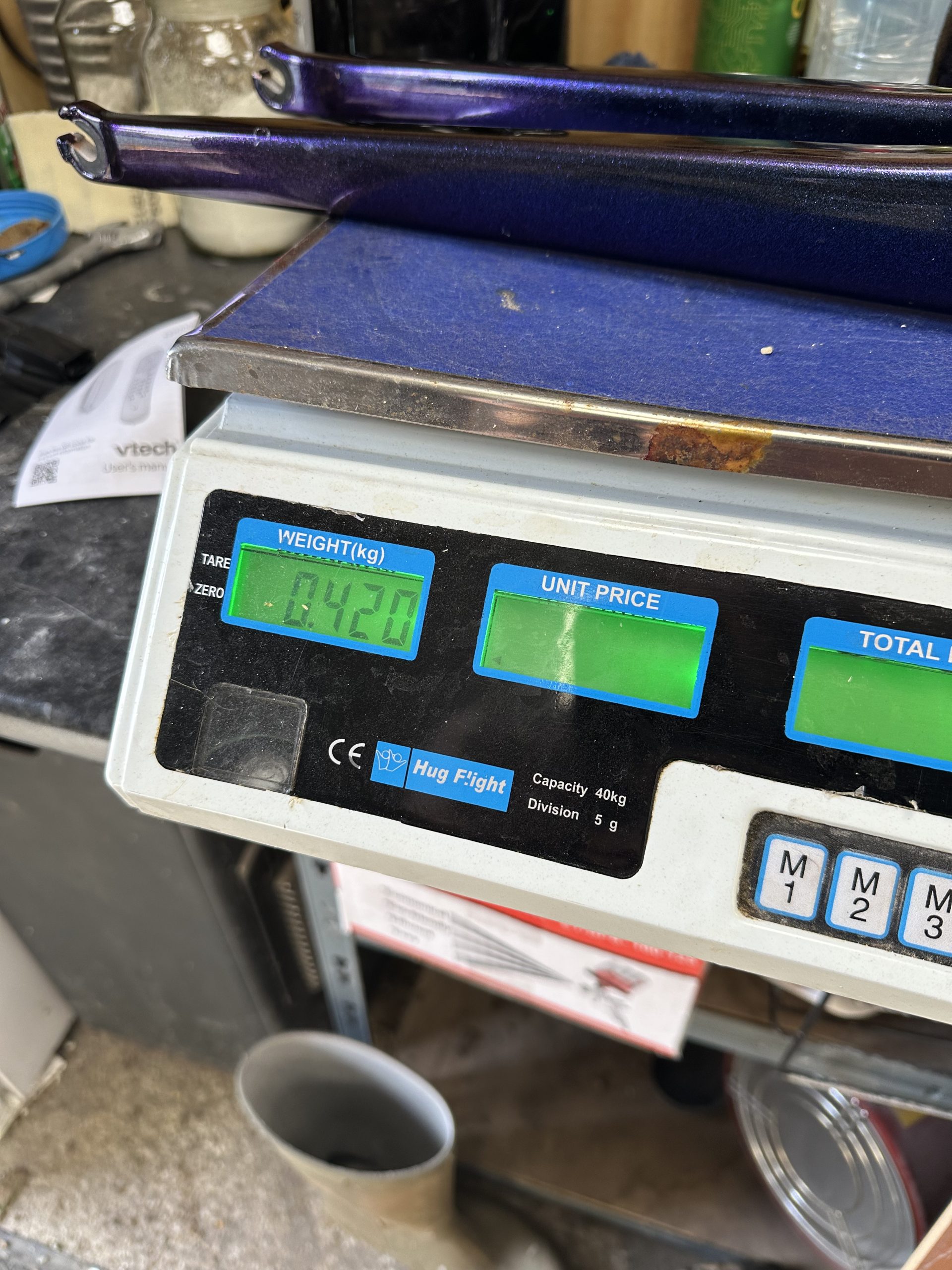
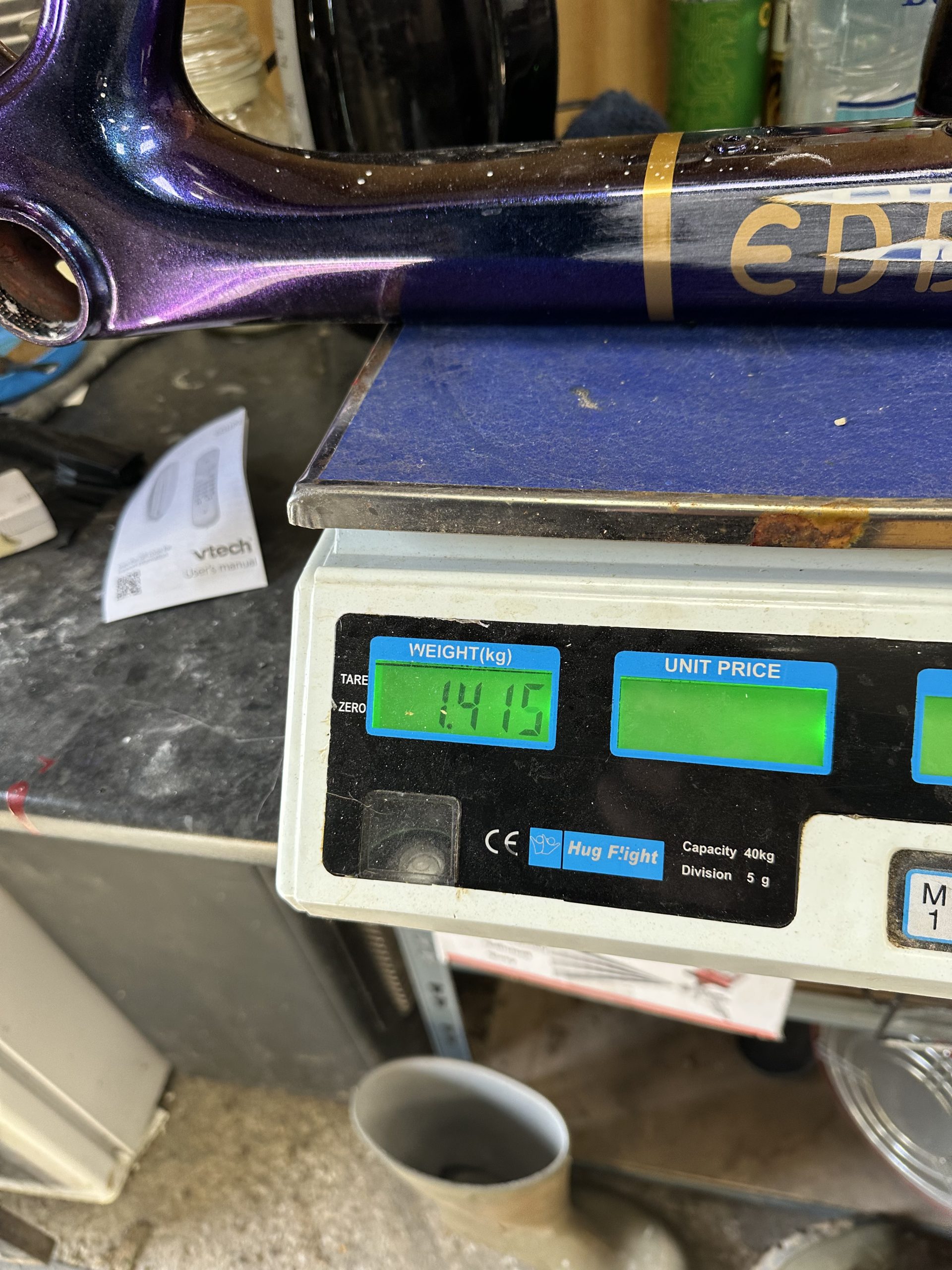
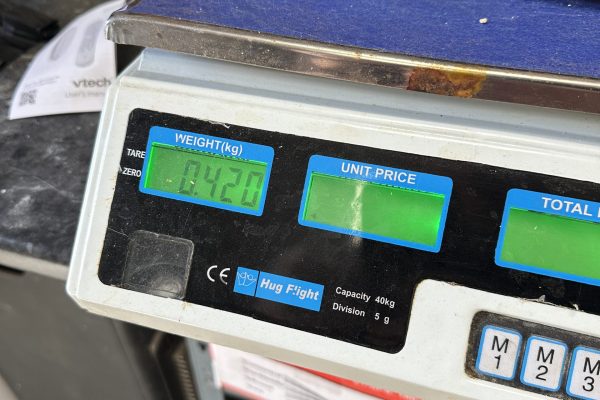
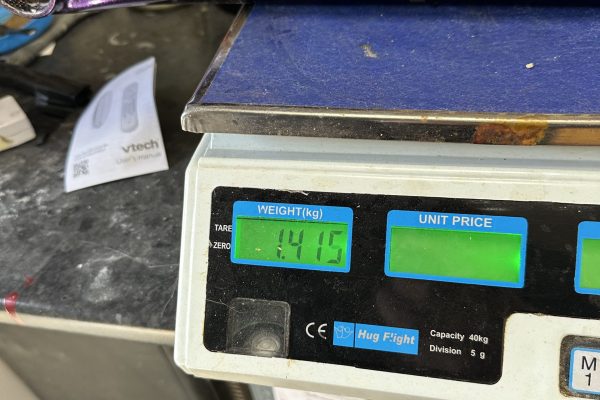
Weighing the frame before starting any major work came in at 1415g and the fork weighed 420g.
That’s pretty heavy for a carbon frame to weigh nearly 2kg, especially from a reputable brand like Merckx.
From the start I knew this frame was going to take a lot of time and effort to get right.
I consulted with the customer at all points and it was agreed the best course of action was to fully strip the frame down to bare carbon or at least the last layer of factory primer and then start again.
Sanding the frame in places it looked like a gobstopper sweet with various layers showing through.
Originally a very striking orange and blue design before its purple makeover, but why Merckx decided it needed 3-4 orange paint jobs is beyond me, as is the poor UCI decal they had applied in the factory that looked like someone had printed on a desktop printer compared to the slick screen printed waterslide transfers that are usually used.
This paint was thick! so from the start we used a small dual action palm sander to really cut through the bulk of paint.
We use the Mirka Deros DA sander with a 5mm face pad over a more traditional orbital sander. This palm sander has extraction built in which cuts down on a lot of dust. Its primarily used on all flat and lightly curved surfaces to remove the bulk of paint before going in by hand to take off paint from edges and countours.
Regardless this frame took many hours with the sander.
In total it added up to a full week of sanding in terms of working hours.
While sanding was happening we sorted the colours out.
Nick, the customer wanted a ‘like for like’ repaint as he had spent a lot of time with the other painter choosing the exact colour he wanted.
The other painter didn’t share this information so it was a case of trying to match it.
All we knew, it was a colour shifting large particle flip paint. We have various suppliers in the UK which we made some samples of to try and get the right one.
After some sprayouts and checking with Nick, we decided Specialist Paints ‘Crystal Blue’ was probably what was originally used.
Once sanded down to a level we was happy with the frame came in at 930g and the fork 360g.
It was then time for the frame to go in the booth and receive a correct paint job. Which is what should have been done by the other painter.
Unfortunately you do get what pay for, and as Ive seen quite often in this industry the customer doesn’t get what they should – for what they have paid for. There are a few cowboys out there.
This is one of the reasons I have created this post, to help inform people of what actually goes into a paint job and what they are paying for.
The frame was then given a preliminary black primer, which is sanded down to fill and remove minor surface scratches and create a nice smooth substrate for further paint to adhere to.
A coat of base black was sprayed before the Specialistpaints Crystal blue was applied. Around 3 coats to build a good intense level of pearl.
Once dried, the masking and stencils were applied for the logos and graphics. These are all airbrushed on where possible to reduce the amount of stickers.
A new UCI decal was sourced, and a few customer additions added such as the Lion of Flanders and the cobbles inside the fork.
Once all artwork was completed, the frame is given a gloss clear coat, which is then sanded (flatted) down knocking back any edges from the logos and artwork and making the surface as smooth as possible before a final ‘flow coat’ of gloss clear is applied.
Final buff and polish and the frame is complete.
The frame was then given a preliminary black primer, which is sanded down to fill and remove minor surface scratches and create a nice smooth substrate for further paint to adhere to.
A coat of base black was sprayed before the Specialistpaints Crystal blue was applied. Around 3 coats to build a good intense level of pearl.
Once dried, the masking and stencils were applied for the logos and graphics. These are all airbrushed on where possible to reduce the amount of stickers.
A new UCI decal was sourced, and a few customer additions added such as the Lion of Flanders and the cobbles inside the fork.
Once all artwork was completed, the frame is given a gloss clear coat, which is then sanded (flatted) down knocking back any edges from the logos and artwork and making the surface as smooth as possible before a final ‘flow coat’ of gloss clear is applied.
Final buff and polish and the frame is complete.
Now the big question.
How much weight did we save?
The original weight was 1415g for the frame and 420g for the fork (1835g).
The new weight is 1015g for the frame and 375g for the fork (1385g)
That’s a huge weight loss of 450g!
Nearly half a kilogram of paint, close to 25% weight reduction.
This was one of the heaviest paint jobs we’ve cut.
Nick was super happy with the end result and even said he could tell a big difference.
Looking to customise your bike without compromising performance?
At Kustomflow, we specialise in high-quality custom bicycle paint with weight-conscious finishes.